
70 students of the English Language Study Program of the Faculty of Teacher Training and Education (FKIP) taking the Grammar in Spoken Discourse course in the even semester of 2022/2023 will be involved in the International Virtual Exchange (IVE) Project, joining and interacting with 10,000 students from 28 countries in the world.
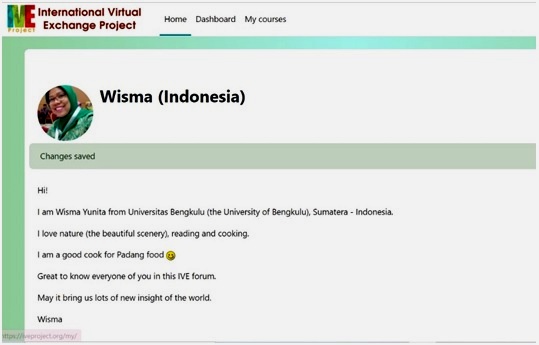
This involvement is because in the previous period, October – December 2022, the Lecturer of the Grammar Course in Spoken Discourse, Dr. Wisma Yunita, M.Pd was considered quite successful in involving 72 students (two classes) in taking part in the activity until it was finished.
“I was invited again by the IVE Project Coordinator to take part in the even semester of 2022/2023. Because this activity is very beneficial for students, I will register another 70 students (two classes),” said Dr. Wisma Yunita.
Before deciding to re-enroll students in IVE Project activities, Dr. Wisma Yunita, herself distributed questionnaires with open questions to students who took part in the IVE Project last period.
From the results of the questionnaire, the students admitted that they were very impressed, happy, and very willing to be invited to return to this activity. “Students are very enthusiastic and eager to be involved in the IVE Project if there is an opportunity. Because of that, I re-enrolled 70 students in this batch,” said Dr. Wisma Yunita who is also the Head of UPT Language UNIB.
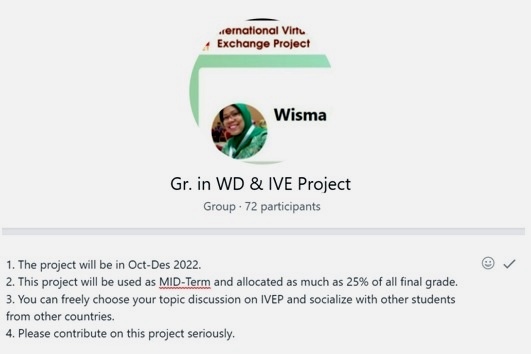
As explained by Dr. Wisma, the International Virtual Exchange Project is an international-scale academic nuanced activity funded by the Japanese Government. This activity involved lecturers from 28 countries and more than 10,000 students. From Indonesia, only two lecturers participated, namely from the University of Bengkulu and the University of La Tansa Mashiro, Banten.
It was started with an invitation via email from Associate Prof. Dr. Eric Hagley, the Coordinator of The International Virtual Exchange Project and lecturer at Hosei University, Japan. Previously, Dr. Wisma and Dr. Eric Hagley had known each other through the English teaching professional association.
To take part in this program, lecturers must register students through the IVE Project Coordinator, Eric Hagley. One of the conditions for this activity is that lecturers must make the IVE Project part of their lecture activities and get a certain portion in the final assessment process of the courses they teach.
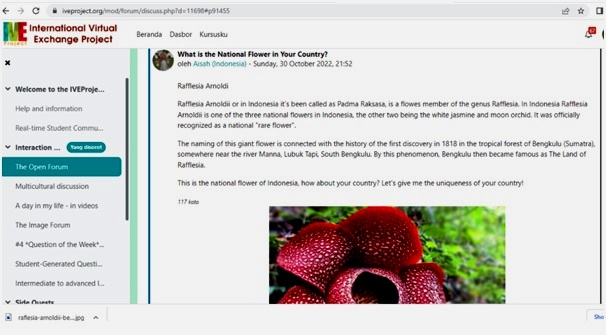
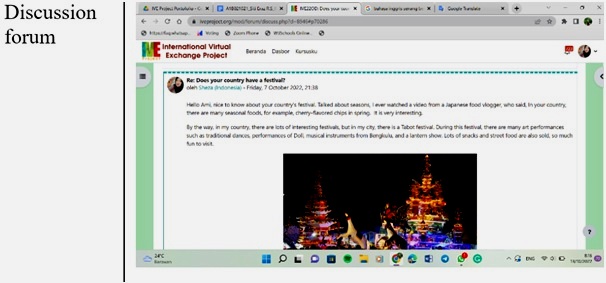
At the initial activity, the lecturers interacted through the Teacher Forum and had previously introduced themselves and filled out their profiles on the IVE Project platform, then participated in discussions and watched videos on how to carry out their roles as lecturers in the IVE Project.
Dr. Wisma herself provides a portion of 25% of the total assessment for the IVE project activities using weekly portfolio reports that are collected via Google Drive. In addition, the course runs the same as lectures in general, there are still 16 meetings, assignments, and final tests.
All learning processes also use technology in the form of the Moodle IVE project platform, WhatsApp group, Video Editor and Google Drive. Through this activity, students interact with students from 28 countries such as Japan, Korea, Taiwan, Colombia, Peru, Morocco, Argentina, and Zimbabwe through various menus in the learning management system.
The menus on the IVE Project platform are the Open Forum, Multicultural Discussion, Image Forum, A Day in My Life, Student Generated Questions, Real-time student communication, and side quests.
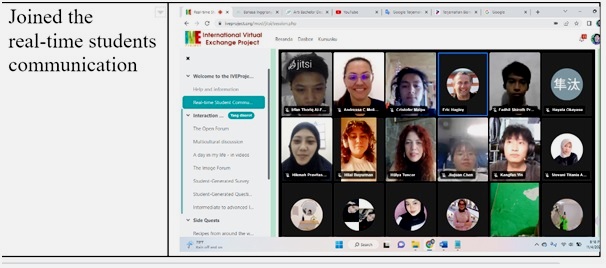
Through this activity, the students interact and introduce each other to the culture of their respective countries, telling stories about hobbies, favorite foods, games they play, favorite songs, and more. Every week they also hold Real-time communication meetings with participants from other countries and communicate in English.
“Hopefully the involvement of 70 students in the even semester of 2022/2023 can run well and be successful like the batch from October to December 2022 and in the future, we will become more accustomed to involving students in international scale activities,” said Dr. Wisma, while hoping that this activity can become a form of creativity in integrating learning using international standard information technology that is able to contribute to the internationalization of higher education programs. [Author: Purna Herawan. Editor: Nursihati/Humas].